
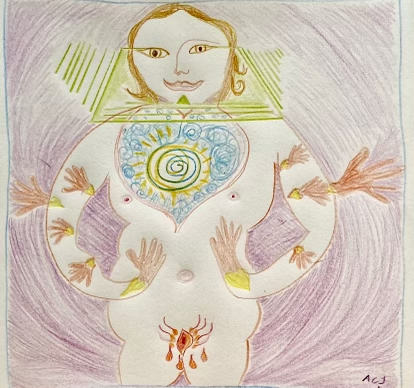
Vulnera : wound
Abilitas : ability
The hero Achilles was son of the mortal king Peleus and the sea nymph Thetis who tried to make him immortal by dipping him into the river Styx, threshold of the Underworld, world of the dead. Yet, she held him by the heel in the process and so his heel was left vulnerable to injuries and wounds.
The attempt to make a half-mortal immortal failed and Achilles was killed in battle by the Trojan prince Paris who shot an arrow into his only vulnerable spot: his heel.
It is tempting to pretend invulnerability or being above wounding. It comes across as impressive and attracts envy or admiration, and even idolatry from those who feel disempowered and seek power in a projected image. Tyrants and dictators have used the trick. Thrones, gemmed crowns, and glamorous attire or uniforms aim to support the claim. But the study of history shows that all mortal men, however powerful for a while, end up defeated by the great equalizer: Death. In this respect, author and educator Christine Downing wrote:
For what Persephone offers is healing of our fear of woundedness and vulnerability,
our fear of finitude and death. Herself abducted by Hades, she comes to love him; herself taken to the underworld against her will, she comes to be its queen. (Even the god of the underworld, Hades, had, as we noted above, suffered a grievous wound, so serious that only a god could recover from it.) The Greeks saw the underworld as the place where psyches live; they saw Persephone’s mysteries at Eleusis as the rituals whereby one learned that entering Hades might be blessing rather than curse. What they had rituals to help them learn, we may need to learn from our own experiences of being wounded; release from what may be the most serious illness of all, the fantasy of a health without wounds, a life without death.
In the context of human relationships, vulnerability can be hard, yet it is a necessary component of intimacy, the starved and neglected muse of relationality. Who dares to be soft, innocent, and open as a two-year old in the presence of another human being? It takes profound courage to risk to be wounded again, because each wound bears a scar that hardens us, or else, deforms our perception and biases us.
I need to take the first step. You need to take the first step. It is the ultimate act of courage—action of the heart, etymologically. It looks like this:
First, pay attention to how you feel in your body right now. Yes, right now, what’s happening in your belly, your chest, your back, your jaws? Notice, stay with it for a moment, be an empathic friend to yourself. Nothing to change, nothing to eschew. This is a mindfulness tool, as old as ancient wisdom, revitalized in the 20th century by Dan Siegel (2009), psychiatrist and executive director of the Mindsight Institute who wrote:
Mindful awareness has been demonstrated to alter brain function, mental activity, and interpersonal relationships toward well-being. This article hypothesizes that mindful awareness promotes these positive changes through a proposed “internal attunement” that catalyzes the fundamental process of integration. Integration—the linkage of differentiated elements of a system—leads to the flexible, adaptive, and coherent flow of energy and information in the brain, the mind, and relationships.
Mindful awareness is, as I see it the highest and most important form of self-care. Free, better than massage or a hairdo, and as important as rest (see my upcoming article on the importance of idleness and reverie).